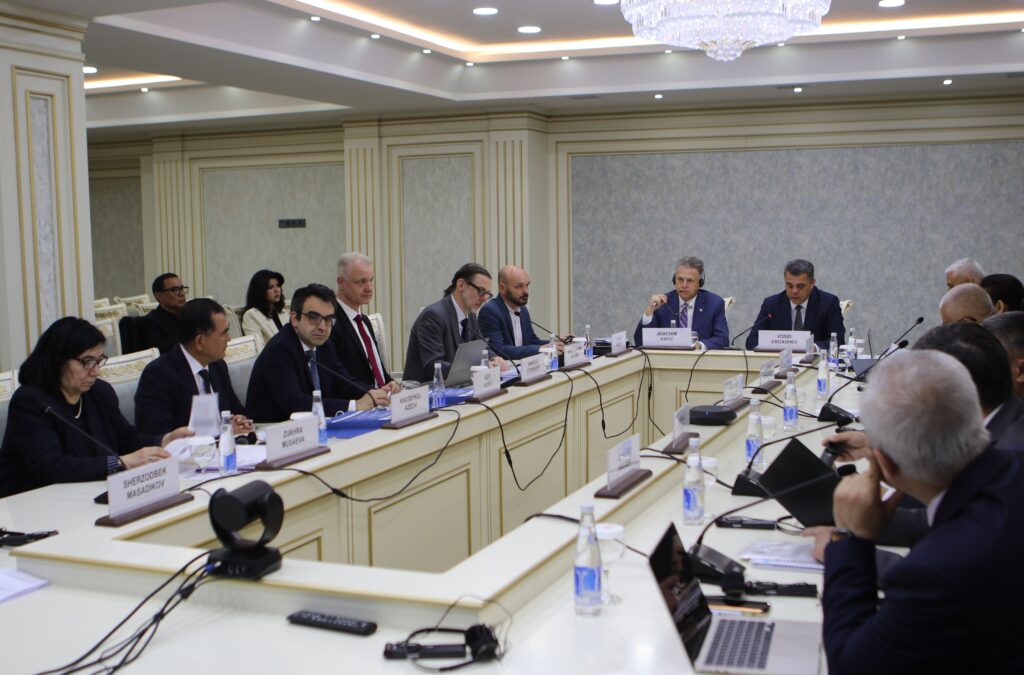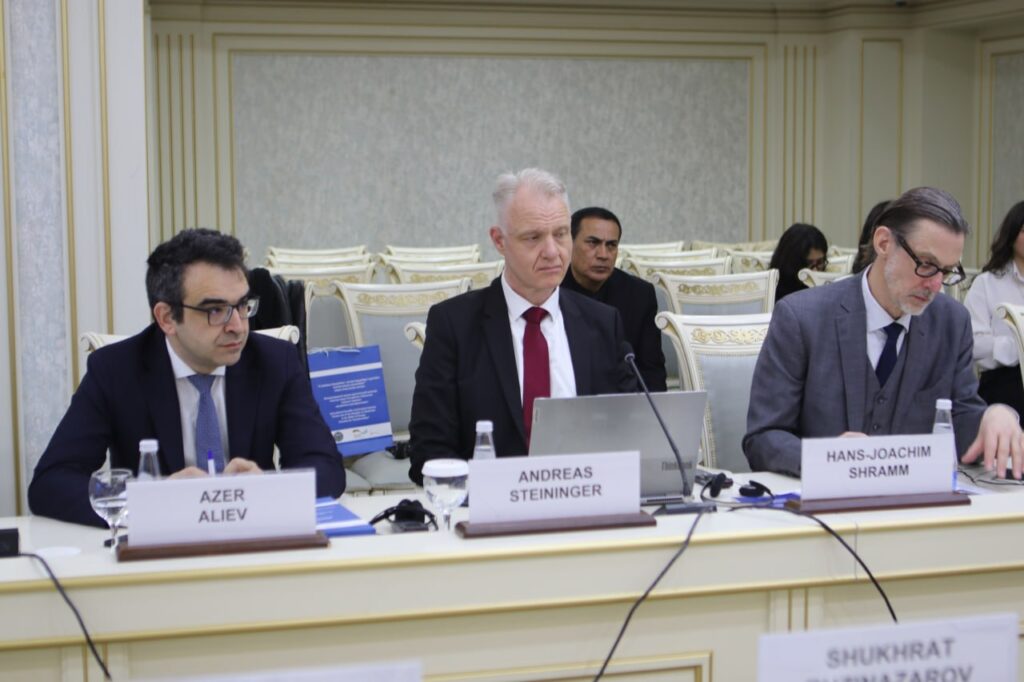
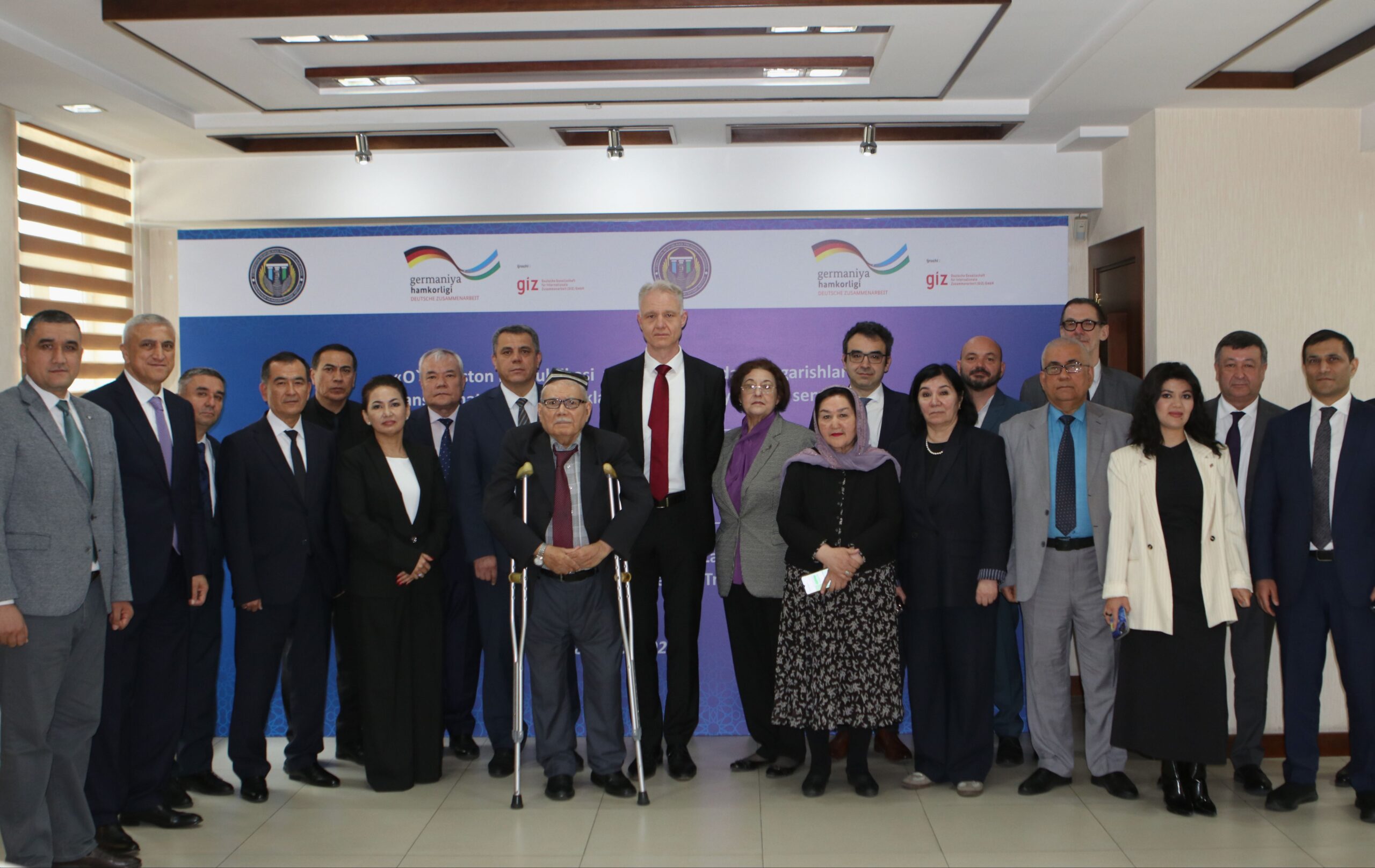
On April 8 of this year, the Institute of Legislation and Legal Policy, jointly with GIZ, held an international scientific and practical seminar titled “Private Law of the Republic of Uzbekistan in the Focus of Change: Transformation Priorities.”
The discussion platform brought together leading representatives of the academic and expert community from Uzbekistan, Germany, the United Kingdom, and Turkmenistan. Representatives of state bodies and educational institutions also actively participated in the seminar, including the Supreme Court, the Constitutional Court, the Ministry of Justice, the Academy of Justice, Tashkent State University of Law, the Chamber of Notaries, and the University of World Economy and Diplomacy.
The main focus of the event was the discussion of current issues related to the development and improvement of private law in the country, primarily in the context of a detailed analysis and testing of the provisions of the draft Civil Code of the Republic of Uzbekistan in its new edition.
During the seminar, reports were presented covering a wide range of areas of legal transformation: from the fundamental concepts of civil legislation to its individual institutions. Priority attention was given to core issues of the private law system, particularly the mechanisms for correlating the norms of the Civil Code with acts of special legislation, as well as the implementation of the principle of good faith and the protection of legitimate expectations.
Key elements of the General Part of civil law were also analyzed, including theoretical and practical aspects of modernizing the organizational and legal forms of legal entities, as well as the legal consequences of declaring transactions invalid.
In the context of regulating specific legal relations, participants discussed promising directions for improving contract law within the framework of the draft Civil Code in its new edition, as well as conceptual approaches to reforming the field of intellectual property in the Republic of Uzbekistan.
At the end of the agenda, specialized issues of law enforcement were considered, including the specifics of regulating property rights in the doctrine and practice of private international law.
Following the presentations, a constructive exchange of views took place. Participants discussed practical aspects of applying the proposed legislative innovations and developed concrete expert recommendations that will serve as a solid foundation for further improvement of the country’s civil legislation.