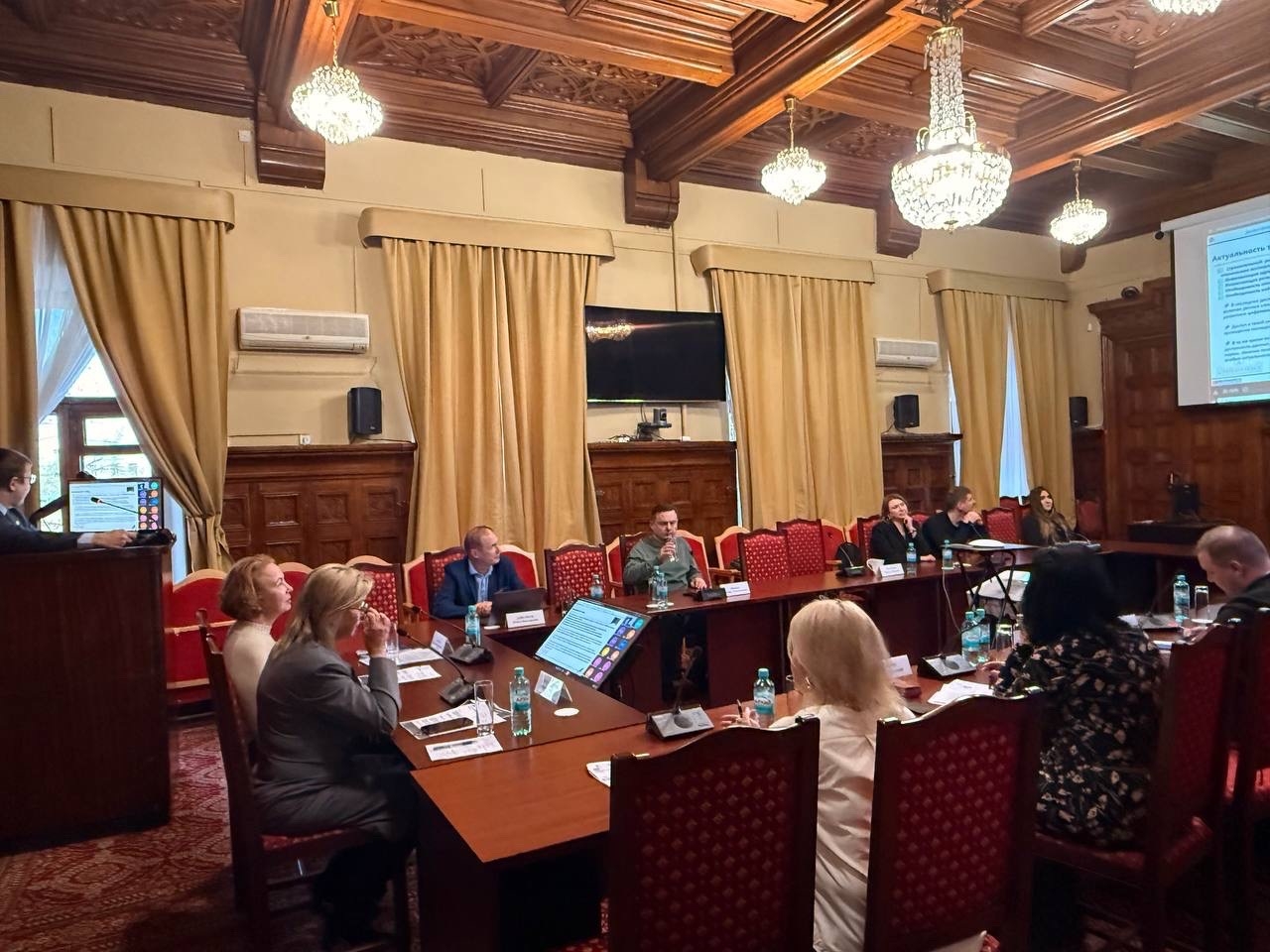
Representatives of the ILLP, namely senior research fellow G.Sattarova and leading research fellows A.Egamov and K.Mirkamilova, participated online in the international scientific and practical conference titled “Public health in the vector of ensuring Russia’s demographic sustainability: issues of legal regulation and public administration,” held on April 29 of this year in Moscow.
The event was organized by the National research institute of public health in cooperation with the Moscow state law university.
During the conference, key issues of legal support for public health were discussed, including the constitutional and legal foundations of demographic policy, the role of the state and civil society institutions, as well as the impact of modern medical and digital technologies on demographic processes.
Particular attention was paid to the introduction of innovative technologies in healthcare, legal aspects of the use of artificial intelligence in the reproductive sphere, ensuring access to medical information, and improving the quality of medical services.
The event demonstrated a high level of scientific and expert interaction between representatives of the legal and medical communities, as well as significant potential for the development of interstate cooperation in the field of demographic policy and public health.
The conference facilitated the exchange of advanced international experience, the development of new scientific and practical approaches to ensuring public health, and the strengthening of professional ties between профиль institutions.
Experts from Belarus, Kazakhstan, and Kyrgyzstan also participated in the conference, presenting national models of active longevity.
The event concluded with the presentation of the collective monograph titled “National models of legal support for healthy and active longevity in the context of medical technologies: Russian and foreign experience,” edited by professor V.V.Komarova of MSLU.
Overall, the participation of ILLP representatives in the conference contributed to a deeper understanding of current challenges in the field of demographic policy and helped identify promising directions for further scientific and analytical research.